

Introduction
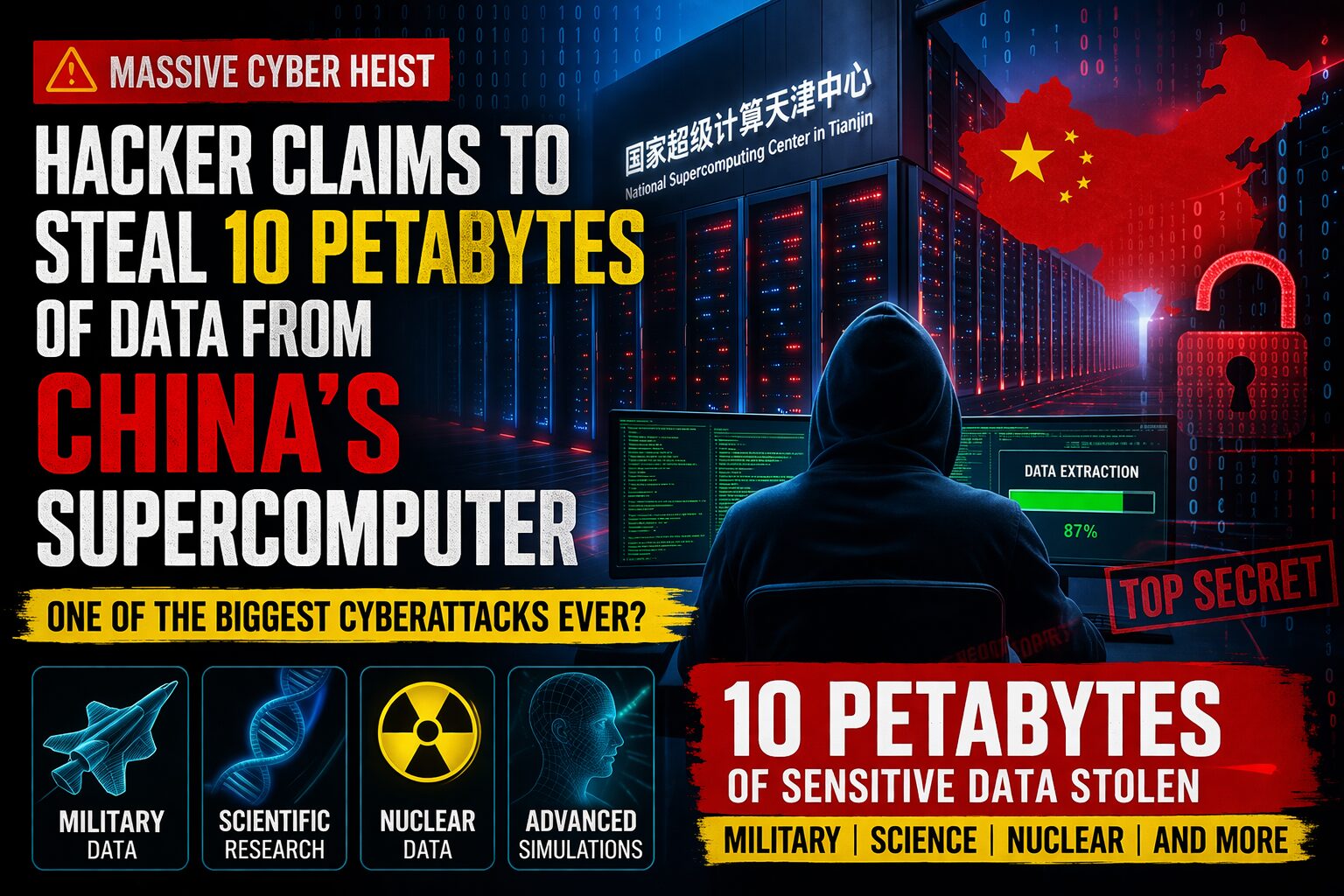
Reports suggest a hacker has breached a major Chinese supercomputing facility and taken over 10 petabytes of sensitive data. This incident could become one of the biggest cybersecurity events in recent history. It raises serious concerns in the global tech and security sectors, as the information may include classified military, scientific, and technological data. The scale and implications of this breach make it a pivotal case in cyber warfare and digital espionage. While investigations are ongoing and official confirmations are lacking, early reports indicate this incident could change how countries handle cybersecurity in the future.
_________________________________________________________________________________________________
What Happened?
According to multiple international news sources, a hacker or possibly a group of hackers claimed to have infiltrated systems linked to one of China’s leading supercomputing centers. These centers handle vast datasets and perform complex calculations for research, defense, and industry.
The attacker reportedly accessed internal systems and stole about 10 petabytes (PB) of data. To understand how much this is:
• 1 petabyte = 1 million gigabytes
• 10 petabytes = 10 million gigabytes
This amount of data is immense, comparable to millions of high-definition movies or large national databases.
The hacker allegedly later attempted to sell the stolen data on underground cybercrime forums, indicating possible financial motives along with geopolitical ones.
______________________________________________________________________________________________
What Kind of Data Was Stolen?
Though the exact contents of the stolen data have not been fully confirmed, reports suggest the breach may involve highly sensitive and valuable information. Some suspected categories include:
• Military and Defense Information
The data may include simulation models, defense strategies, and research related to military technologies. If true, this could have serious implications for national security.
• Aerospace and Engineering Research
Supercomputers are often used for advanced simulations in aerospace engineering, such as aircraft design and testing. Leaked data could reveal intellectual property and technological progress.
• Scientific and Medical Data
The breach may also include datasets from bioinformatics, pharmaceuticals, and medical research—fields that rely on massive computational resources.
• Nuclear and Energy Research
Some reports suggest the data might involve nuclear simulations or research related to energy, which is usually classified.
_______________________________________________________________________________________________
Why Target a Supercomputer?
Supercomputers rank among a country's most valuable digital assets. Places like China’s National Supercomputing Centers are designed to process large amounts of data at remarkable speeds. They are used for:
• Climate modeling
• Artificial intelligence development
• Military simulations
• Scientific research
• Industrial optimization
Because of their strategic significance, these systems are prime targets for cyber espionage and attacks. A successful breach indicates a high level of sophistication and planning by the attacker.
_______________________________________________________________________________________________
How Did the Hack Happen?
At this point, the exact method used in the attack is unclear. However, cybersecurity experts suggest several possible attack routes:
• Exploiting Vulnerabilities
The hacker may have taken advantage of unpatched software flaws in the system.
• Phishing or Social Engineering
Human error is often the weakest link in cybersecurity. Attackers might have gained access through compromised credentials.
• Insider Threat
In some cases, breaches happen due to individuals with authorized access who misuse their privileges.
• Network Penetration
Advanced persistent threats (APTs) often involve long-term infiltration of networks, allowing attackers to move around and gather data over time.
_______________________________________________________________________________________________
The Dark Web Connection
One of the most concerning aspects of this incident is the reported attempt to sell the stolen data on the dark web. Cybercriminal marketplaces often use cryptocurrencies like Bitcoin or Monero to enable anonymous transactions.
If the data is indeed for sale, it could end up with:
• Rival nations
• Cybercrime groups
• Private companies looking for an advantage
This significantly increases the potential impact of the breach.
___________________________________________________________________________________________________
Global Implications
The potential effects of this cyberattack go beyond a single country.
1. National Security Risks
If military or defense-related information has been compromised, it could weaken strategic capabilities and expose weaknesses.
2. Rise in Cyber Warfare
This incident emphasizes the growing role of cyber warfare in global conflicts. Countries are increasingly investing in both offensive and defensive cyber measures.
3. Intellectual Property Theft
The theft of scientific and technological data could speed up innovation in rival countries while hurting original creators.
4. Cybersecurity Awareness
Organizations worldwide may need to re-evaluate their security protocols to prevent similar breaches.
_______________________________________________________________________________________________
Is the Claim Verified?
Despite extensive coverage, it is important to take a cautious approach to the situation.
• The claims originated from hacker forums
• Independent verification is still limited
• Official statements from Chinese authorities are minimal
However, cybersecurity experts caution that even the possibility of such a breach is alarming enough to warrant serious attention.
___________________________________________________________________________________________
Why This Breach Is So Significant
Several factors make this incident particularly alarming:
• Unprecedented Scale
10 petabytes of data is an extraordinary amount, rarely seen in cyberattacks.
• High-Value Target
Supercomputing centers are critical national infrastructure.
• Sensitive Content
The potential inclusion of military and scientific data raises the stakes considerably.
• Monetization
Selling the data adds a financial element to the attack.
____________________________________________________________________________________________
Lessons for the Tech Industry
This incident acts as a wake-up call for organizations around the globe. Key takeaways include:
• Strengthen Security Infrastructure
Invest in advanced security systems, including detection and prevention measures.
• Implement Zero-Trust Models
Never assume trust within a network; verify every access request.
• Regular Updates and Patching
Keep all systems updated to prevent exploitation of known vulnerabilities.
• Monitor Data Activity
Detect unusual data transfers or access patterns early.
• Train Employees
Educate staff on cybersecurity best practices to reduce errors.
__________________________________________________________________________________________________
The Future of Cybersecurity
As technology evolves, so do cyber threats. This incident highlights the need for:
• International cooperation in cybersecurity
• Stronger regulations and standards
• Investment in cyber defense technologies
• Ethical hacking and penetration testing
Cybersecurity is no longer just an IT issue; it is a global priority impacting governments, businesses, and individuals alike.
_______________________________________________________________________________________________
Conclusion
The reported breach of a Chinese supercomputing center, involving the alleged theft of over 10 petabytes of data, marks a potentially historic moment in cybersecurity. While many details remain unconfirmed, the scale and implications of the incident are undeniable.
Whether or not this event is fully verified, it highlights a critical reality: no system is completely secure, and the fight to protect data is more important than ever.
As cyber threats grow in complexity and scale, organizations must remain vigilant, proactive, and ready to defend against the next major attack.
________________________________________________________________________________________________
Stay updated with the latest tech news, cybersecurity insights, and tutorials on KasuTechTips!